

Geometry Dash Wave
Advertisement
Geometry Dash Wave is a mode within the Geometry Dash universe where players control a wave-shaped icon that moves diagonally through tight corridors. The icon rises when the player holds input and descends when released, creating a continuous slope-like movement. The objective is to navigate through sharply angled passages without touching any obstacles. Levels designed for this mode often rely on narrow gaps, sudden transitions and strict precision. The gameplay emphasizes timing and stability rather than platform-style jumping.
Advertisement




Similiar games






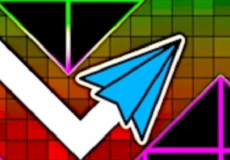
Geometry Dash Wave is a mode within the Geometry Dash universe where players control a wave-shaped icon that moves diagonally through tight corridors. The icon rises when the player holds input and descends when released, creating a continuous slope-like movement. The objective is to navigate through sharply angled passages without touching any obstacles. Levels designed for this mode often rely on narrow gaps, sudden transitions and strict precision. The gameplay emphasizes timing and stability rather than platform-style jumping.
Wave Movement And Control Precision
In Geometry Dash Wave the player’s only action is holding or releasing input to adjust altitude. Despite the simple controls, the movement pattern demands high accuracy, especially at high speed. Sections often alternate between steep ascents and descents, requiring the player to read patterns quickly.
Here is the required list placed in the middle:
· Hold input to move upward
· Release input to move downward
· Navigate through narrow passages
· Maintain rhythm during fast transitions
· Avoid hitting walls or angled obstacles
Level Design And Difficulty Structure
Geometry Dash Wave levels are built using linear pathways that form zig-zag patterns, diagonal tunnels or shifting environments. Some levels include portal transitions that change wave size, speed or gravity. Because the wave reacts instantly to input, even small adjustments can determine whether the player clears a section or crashes. Designers often use visual cues to signal upcoming changes, giving players a brief moment to prepare. Difficulty scales rapidly, especially in user-created levels.
Speed Variations And Challenge Progression
The wave mode frequently includes speed modifiers that accelerate movement to extreme rates. Faster segments require consistent input timing and a clear understanding of the path layout. Slower segments introduce tight micro-controls where the icon must stay centered between extremely thin walls. Combined with music synchronization, many levels match rhythm to movement, creating a flow that connects obstacles to the track’s beat. This pattern recognition becomes essential for mastering harder levels.
Replay Value And Community Impact
Geometry Dash Wave holds a central place in the broader Geometry Dash community, with many creators designing levels specifically for this mode. Because each level has fixed patterns, success depends on memorization, control improvement and repeated attempts. Players often replay sections many times to refine their movements and learn the path. The fast restarts and consistent physics system support long practice sessions. Geometry Dash Wave remains a popular mode due to its precision-based challenge and continuous movement style.
Discuss Geometry Dash Wave
